


Literature Review
- giannis330
- Apr 15, 2023
- 4 min read
Literature Review
Ioannis Kaprosioutis
09/04/2023
For my thesis, I will try to trace, focusing my attention on short stories, and in relation to several essays, which both are engaging with the grotesque imagery in one way or another, the intertextual dialogue among those texts, having as a central axis Mikhail Bakhtin’s “Rabelais and his World” (1965) and his theory of the grotesque imagery, as it is seen within the dimensions of the Natural, the Bodily and the Cosmic. While those images can be seen as distinct portrayals, they also interrelate and overlap; out of their fusion new images are constantly created.
The aim of this thesis will be, apart from illuminating the grotesque imagery in those texts, emphasizing their interrelation and interorientation, to try to conceive, as much as possible, their plurality. This plurality, while being expanded and exposed by the Grotesque Image, seems to be correlating with the concept of synecdoche (the substitution of, or the substitutability of, a part for a whole or a whole for a part) following its logic and challenging it, constructing and deconstructing it at the same time. If the synecdochal logic is striving to maintain things pure and orderly, the grotesque image, while supporting this logical structure, is at the same time, by using hyperbolization, exposing it to sudden changes, which can affect alterations upon synecdochal structures, having thus a tendency to disrupt their seeming harmony.
In the end of this research, the first question that I am intending upon answering is what the relation between the grotesque image and synecdoche is. If there is, finally, a relation, what does that mean for synecdoche? Does the grotesque element totally overshadow and annihilate the synecdochal structure or is there an inter-play, a constant substitution of one element for the other, a recurrent construction and deconstruction?
The texts I am going to focus my attention on range from, but are not limited to, Edgar Allan Poe’s (1809 –1849) short stories such as “The Fall of the House of Usher”, “MS Found in a Bottle”, “Lionizing” and “A Descend into the Maelstrom” in which he seems to be combining all three dimensions of the grotesque imagery (Natural, Bodily, Cosmic), especially in the two volumes of his collections “Tales of the Grotesque and Arabesque” (1840). Nathaniel Hawthorne’s (1804 – 1864) “Young Goodman Brown” (1835) and other short stories, while also short stories by Ambrose Bierce (1842 – 1914), can be posited as good examples of the grotesque imagery in Nature, in which its sinister, unwelcoming aspect is accentuated. Moving ahead in time, I believe that H.P. Lovecraft’s (1890 – 1937) stories such as “The Dunwich Horror” (1929), and Franz Kafka’s (1883 – 1924) short stories can provide me with interesting material to support my thesis, and a different – although probably informed by the previous authors – image of the grotesque in their texts.
The essayists I intend upon exploring in relation to the aforementioned short stories are not limited to a specific time period. Michel De Montaigne’s (1533 – 1592) “Essays” can serve as a very rich source of Intertextual information that can be utilized to support my thesis, such as his essay “Of a Monstrous Child” in which he uses the image of conjoined twins to describe the political situation of the period by using synecdochal logic. Giovanni Pico Della Mirandola’s (1463 – 1494) “Oration on the Dignity of Man” (1486), who sees the human as being constantly in an act of becoming, can provide with a variety of Intertextual gems. Texts from the Decadent movement, such as Walter Pater’s (1839-1894) “Renaissance”, Oscar Wilde’s (1854-1900) “The Critic as Artist” (1890) and “The Decay of Lying” (1889), and Charles Baudelaire’s (1821-1867) “Further Notes on Edgar Poe” (1857) are also good examples since they are sharing a lot of elements common to the authors I have mentioned in the previous paragraph. Finally, Ralph Waldo Emerson’s (1803 -1882) Transcendental philosophy as expressed in “Nature” (1836) and “The American Scholar” (1837), while also Edmund Burke’s (1729-1797) philosophy of the Sublime in “A Philosophical Enquiry of the Sublime and Beautiful” (1757) can be contrasted to the alternate views of the authors I am about to explore.
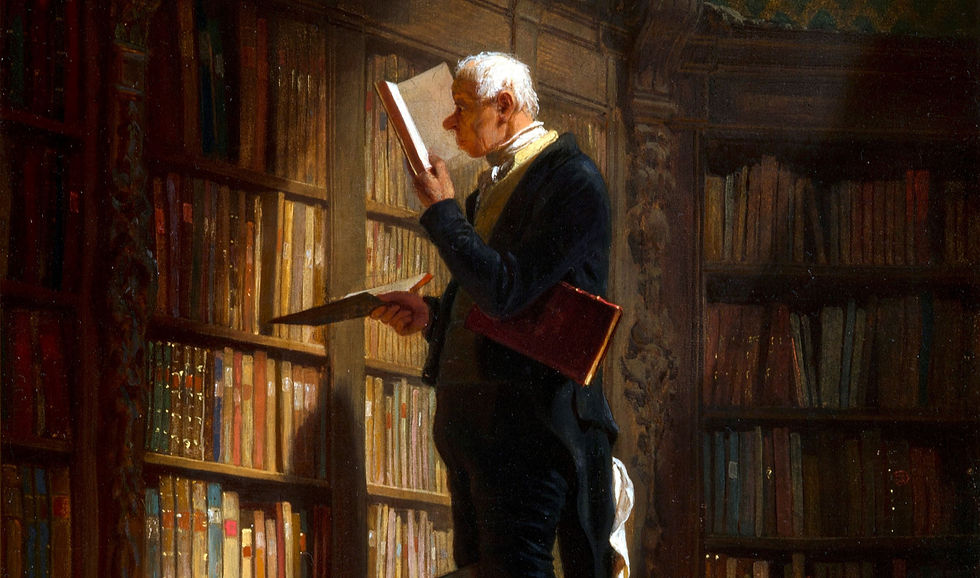
To conduct this analysis, I will follow a post-structuralist approach. This approach will allow me to delve into texts not restricted to a specific period or genre. My preference to focusing on short stories and in particular excerpts from essays is deliberate in that way. The condense text of the short stories will provide me with the essential parts of the images and ideas I am about to explore, while they seem to be retaining similarities to the essays, especially in the cases when the essayists are combining scientific and logical thinking with non-logical and imaginary techniques in their writing. The condense nature of the short stories, the specific excerpts from a variety of essays, and the Intertextual theory that I will use to weave all those elements together, will give me the freedom to expand my analysis to different time periods and genres which inform one another. The texts which are related mostly to the post-structuralist approach, which I am intending upon drawing upon, are Mikhail Bakhtin “The Dialogic Imagination” (1981), Graham Allen “Intertextuality” 3rd ed. (2022), Roland Barthes “S/Z” (1970), Roland Barthes “Textual Analysis”, and Jacques Derrida “Structure, Sign, and Play in the Discourse of the Human Sciences” (1966). Moreover, some other texts which I have found, focusing on the elements of gothic, the grotesque body and the literature of horror, are Kelly Hurley “The Gothic Body” (1996), Asti Hustvedt “The Decadent Reader: Fiction, Fantasy, and Perversion from Fin-de-Siècle France” (1998), Mary Russo “The Female Grotesque: Risk, Excess and Modernity” (1995), and Noel Carrol “The Philosophy of Horror” (1990).


Comments